
If you’re thinking about straightening your smile, you’ve probably run into the same question almost everyone asks first: braces or Invisalign? Both do the same core job, moving your teeth into better alignment, but they go about it differently, and the right pick depends on your case, your habits, and what you want out of treatment. Here’s how the two compare so you can walk into your consultation already knowing which questions to ask.
How Braces and Invisalign Work
Traditional braces use brackets bonded to each tooth and a wire that our doctors adjust over time. That steady, guided pressure is what makes braces so dependable, especially for complex bite issues. Clear aligners like Invisalign take a different route: a series of removable, custom-molded trays that shift your teeth in small steps, with each new tray picking up where the last one left off.
Both approaches are proven. The real difference is how they fit into your life. Braces are fixed in place and always working, while aligners give you flexibility in exchange for the discipline of wearing them 20 to 22 hours a day.

Braces vs. Invisalign at a Glance
Here’s how the two stack up across the things that matter most:
- Best for: braces handle complex bites and work at any age, while Invisalign is a great fit for mild to moderate cases.
- Appearance: braces are visible, though clear brackets soften the look, while Invisalign is nearly invisible.
- Removable: braces stay fixed in place and are always working, while Invisalign trays come out for meals and cleaning.
- Food restrictions: with braces you’ll avoid hard and sticky foods, while Invisalign has none since the trays come out to eat.
- Daily responsibility: braces ask you to brush and floss carefully around the brackets, while Invisalign asks you to wear the trays 20 to 22 hours a day and keep track of them.
- Typical treatment time: braces usually run 12 to 24 months, and Invisalign tends to land around 12 to 18 months.

When Braces Are the Better Fit
Braces still handle the widest range of cases, and for good reason. When teeth need significant rotation, when the bite is off in more than one direction, or when treatment involves a child whose jaw is still growing, the constant control of fixed braces in Lubbock tends to deliver the most predictable result. Braces also take the willpower out of the equation. There’s nothing to remember to put back in, which is a real advantage for younger patients and busy families. If you’d prefer something subtler, clear ceramic braces give you the same reliability with tooth-colored brackets that blend in.
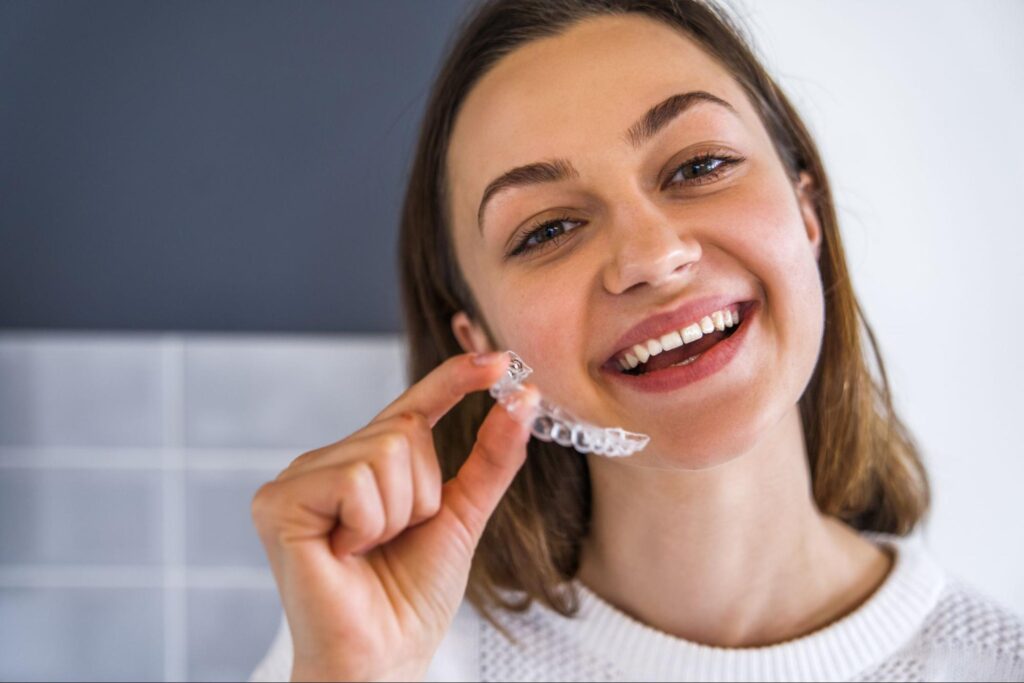
When Invisalign Makes Sense
For mild to moderate crowding or spacing, Invisalign in Lubbock is a great option, particularly for teens and adults who want a discreet look. Because the trays come out, brushing and flossing stay simple, and you can eat whatever you like as long as the aligners go back in promptly. The trade-off is discipline: aligners only work when you wear them, so they suit people who will keep them in for most of the day and keep track of the trays.
Questions That Help You Decide
- How complex is your case? The more correction needed, the more braces tend to shine.
- How visible do you want treatment to be? Aligners and clear braces both help here.
- How consistent will you be? If wearing trays 22 hours a day sounds tough, braces remove the guesswork.
- What are your eating habits? With braces you’ll skip certain foods, so it’s worth knowing what you can eat with braces before you start.
The honest answer is that the best choice is the one you’ll actually stick with. At your consultation, Dr. David Farnsworth takes a look at your teeth, listens to your goals, and gives you a straight recommendation rather than a sales pitch.
Frequently Asked Questions
Is Invisalign as effective as braces?
For mild to moderate cases, Invisalign can achieve results comparable to braces. For complex bites or significant tooth movement, braces usually offer more control. Your orthodontist will tell you honestly which is the better fit for your situation.
Do braces work faster than Invisalign?
It depends on the case. Simple corrections can move quickly with either option, while complex cases are often more predictable with braces. Both typically fall in the 12 to 24 month range.
Can I switch from Invisalign to braces or the other way around?
In some cases, yes. If your teeth aren’t responding the way we’d like, our doctors can adjust the plan. This is one reason a thorough evaluation up front matters so much.
Which is easier to keep clean?
Invisalign has a slight edge because you remove the trays to brush and floss normally. Braces are very manageable too, they just call for a little extra care around the brackets and wires.
Ready to see which option fits your smile? Schedule a free consultation at our Lubbock office and we’ll help you decide with confidence.